Download now


25 November, 2026
MOQ (Minimum Order Quantity) Explained: How It Works in Sportswear Manufacturing
09 January, 2026 | Rigid Sportswear Team
Quick answer: MOQ (minimum order quantity) is the smallest order a manufacturer will accept for one design. Many suppliers ask for much larger minimums; at Rigid Sportswear the MOQ is just 4 pieces per design.
In sportswear manufacturing, the Minimum Order Quantity (MOQ) is a key factor that shapes how production orders are planned and accepted. MOQ is essential for sportswear manufacturers to manage the production lines, acquire the required fabrics, and perform the stitching and printing processes. Sportswear is more complex than regular clothing since it requires technical fabrics, various sizes, and customization options like logos and sublimation. To keep operations smooth and costs down, t-shirt printing manufacturers use quantity thresholds.
Minimum Order Quantity (MOQ) is very important for brands and purchasing teams as it impacts design, pricing, and, most of all, growth. MOQ will directly impact what kinds of fabrics, what colors, and what sizes will be offered, and even the rate of production. With MOQ in their understanding, sportswear brands will be able to make informed, optimized, and effective decisions while building long-term relationships with their manufacturers, while still ensuring quality.
Different Applications of MOQ in the Sport Equipment Manufacturing Industry
MOQ impacts order acceptance, costing, manufacturing, fabric selection, customization, and scheduling for sportswear manufacturing. Minimum quantities of specialized fabrics for lower costs must be taken into account by brands in the MOQ.
Applied for design
The minimum order quantities are fixed by the manufacturer for different styles of products. You require a minimum order quantity for different designs of jerseys. You are not allowed to add the order quantity of different styles. It is important to achieve the required order minimum of both designs to finalize the order. The best corporate clothing suppliers must adhere to the above point if you are in need of the best suppliers.
Split across sizes
In factories, there will be flexibility in terms of size varieties, as long as the cumulative order quantity for the sizes is met. This implies that you can order varying sizes, which include Small (S), Medium (M), Large (L), and Extra Large (XL). There might be a certain quantity needed for each of the sizes offered.
Affects customization options
The degree to which one can customize also impacts the number of items that businesses will need to order. If companies want to work with stock colors and prints, they can easily order lower quantities, which will give them all the flexibility they need. But when it comes to other areas, such as sublimation, embroidery, and maybe customized colors, it will require businesses to place larger orders. If businesses are interested in creating customized fabrics, it will also call for higher minimum orders.
Affects production schedule
The advantage of large quantity orders is their priority processing, ensuring the commencement of production is quicker, thus a quicker delivery time. Small orders might have a delay in processing, thus may be done during the off-season, causing a waiting period.
Guides scaling strategy
Brands may begin by choosing the designs based on requirements in the market. As the brand gains popularity, it may start to broaden its designs based on the demands of its customers. It may introduce new designs based on the preferences of its customers. In this way, the brand shows its adaptability while also satisfying the customers’ preferences.
Applied per color
Usually, every available color will have a minimum order. For instance, if a customer wishes to place an order for jerseys in bright red and dark blue, they will be required to meet the minimum order in both colors. This is to ensure that the different colors of the jerseys will be in adequate supply so that every jersey will stand out in its own special color.
Conclusion
The concept of Minimum Order Quantity (MOQ) is critical when it comes to sportswear manufacturing. The idea of MOQ determines manufacturing process efficiency, cost, and quality control. The concept allows companies to determine design, fabrics, and prices. It is critical information that is valuable to every sportswear clothing brand in all aspects. The concept educates sportswear brands on how to reduce costs and manage their orders.
For more background, see economies of scale on Wikipedia.
Related Guides
More from our Ordering and Pricing series:
- Private Label vs OEM Sportswear Manufacturing: Which Is Best for Your Brand?
- How to Choose the Right Sportswear Manufacturer: 12 Factors Every Brand Must Check
- Questions to Ask Before Placing a Bulk Order
- Tips to Choose the Right Custom Clothing for Teams
- What to Consider Before Buying Sportswear
- Wholesale Sports Apparel Sourcing Guide for Retailers and Brands
Ready to order? See price list, private label manufacturing and custom jersey manufacturing.
Frequently Asked Questions
What does MOQ mean in sportswear manufacturing?
MOQ (minimum order quantity) is the smallest number of pieces a manufacturer will produce for one order or design. It covers setup work such as design, printing set-up and cutting.
What is the MOQ at Rigid Sportswear?
Our minimum order is just 4 pieces per order, and you can mix sizes, names and numbers within it.
Is MOQ counted per design or per size?
At Rigid Sportswear the minimum applies to the order, and sizes can be split freely. Different designs in one order are quoted separately.
Does ordering more pieces reduce the price?
Yes. Orders of 30 pieces or more get a better rate per piece.
Why do some manufacturers ask for 50 or 100 pieces?
Large factories set high MOQs to cover machine set-up costs. With specialist sublimation partners, we can keep the minimum low for small teams.
Recent Posts
Dri Fit Fabric: What It Is and Why Teams Choo
Custom Basketball Jersey Guide: Fit, Fabric a
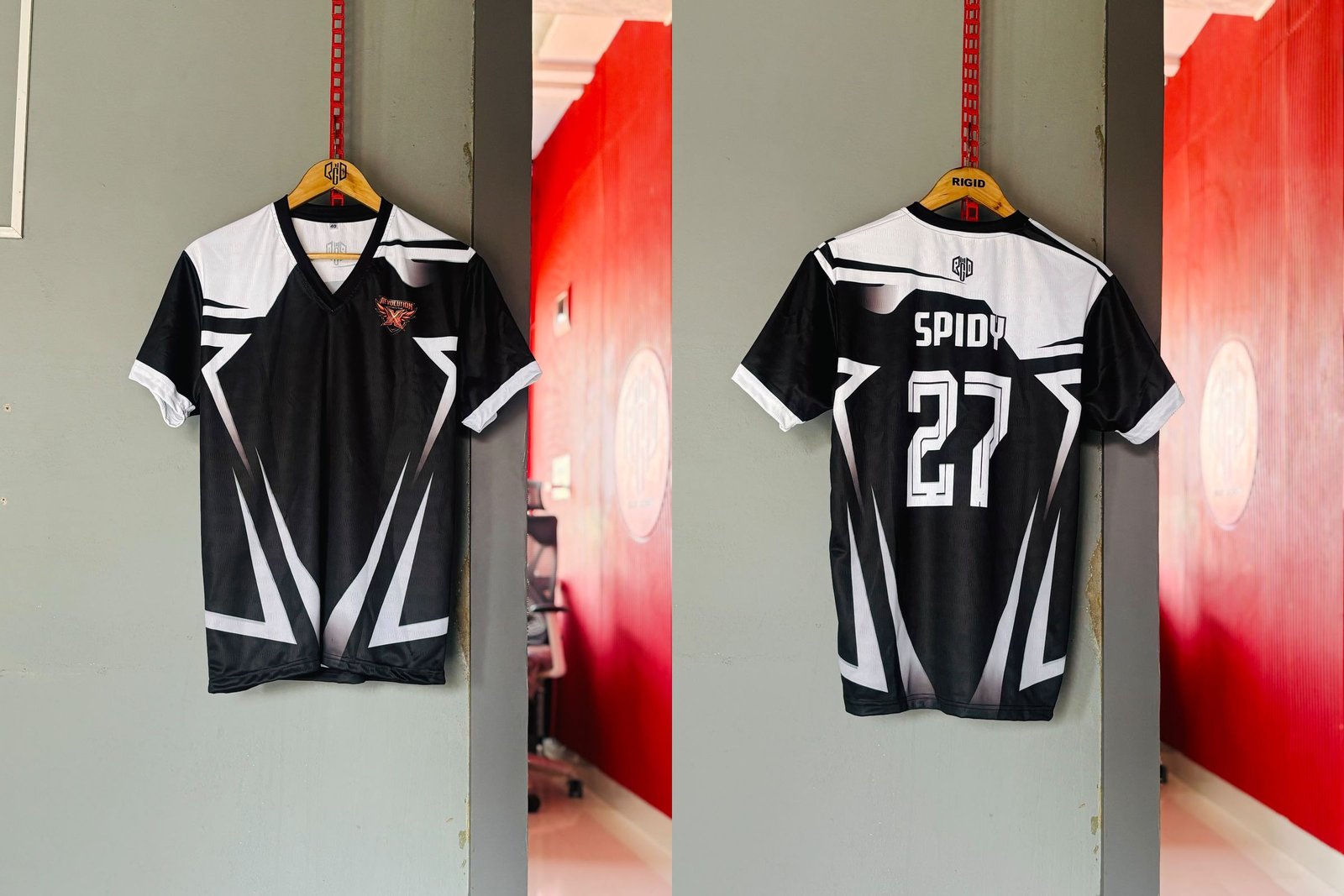
Jersey With Name and Number: A Complete Team
Custom Volleyball Jersey Guide: Design, Fit a
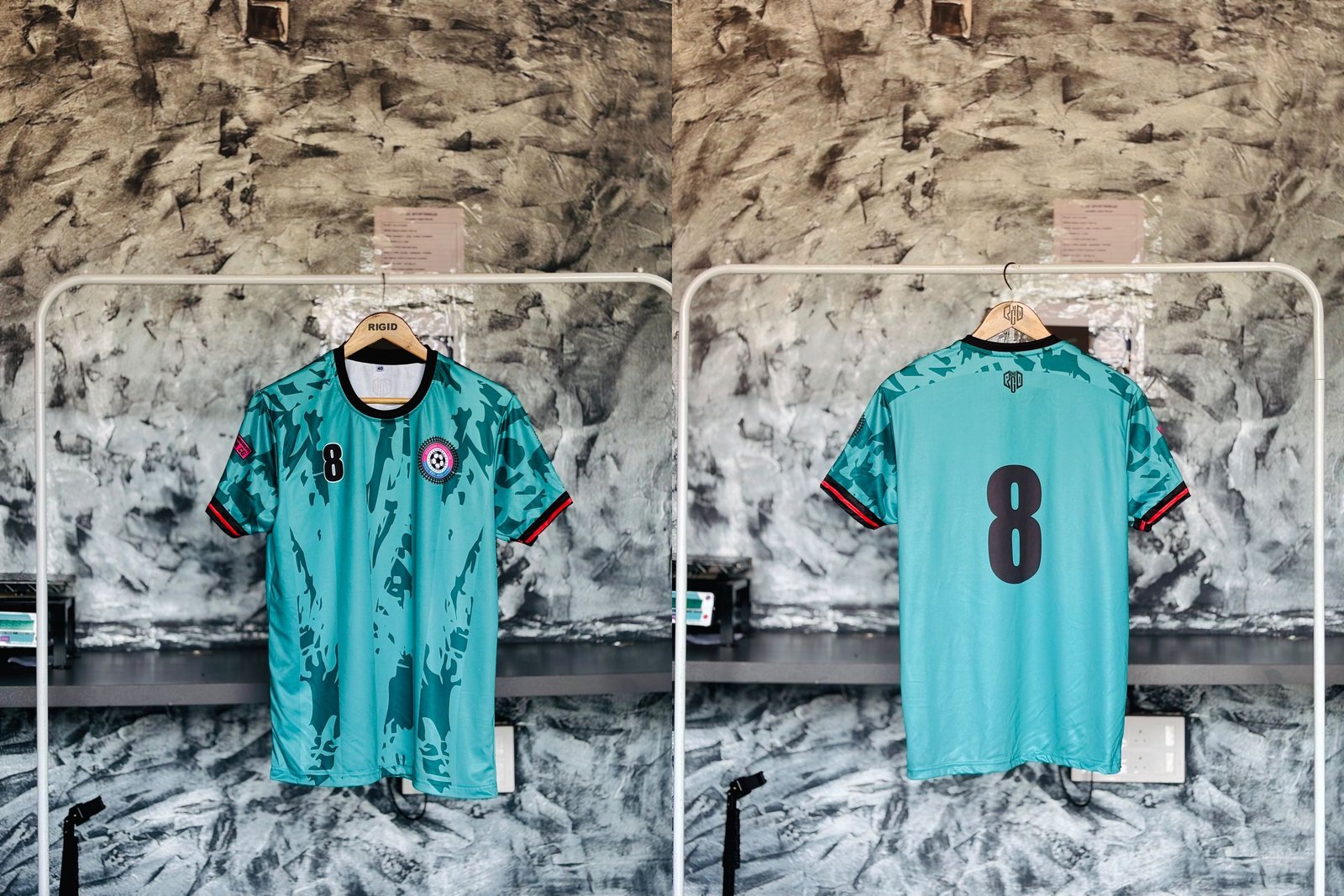
Football Jersey Design Ideas: A Practical Gui
What Is a Jersey Mock-Up and How Do You Appro
Categories